
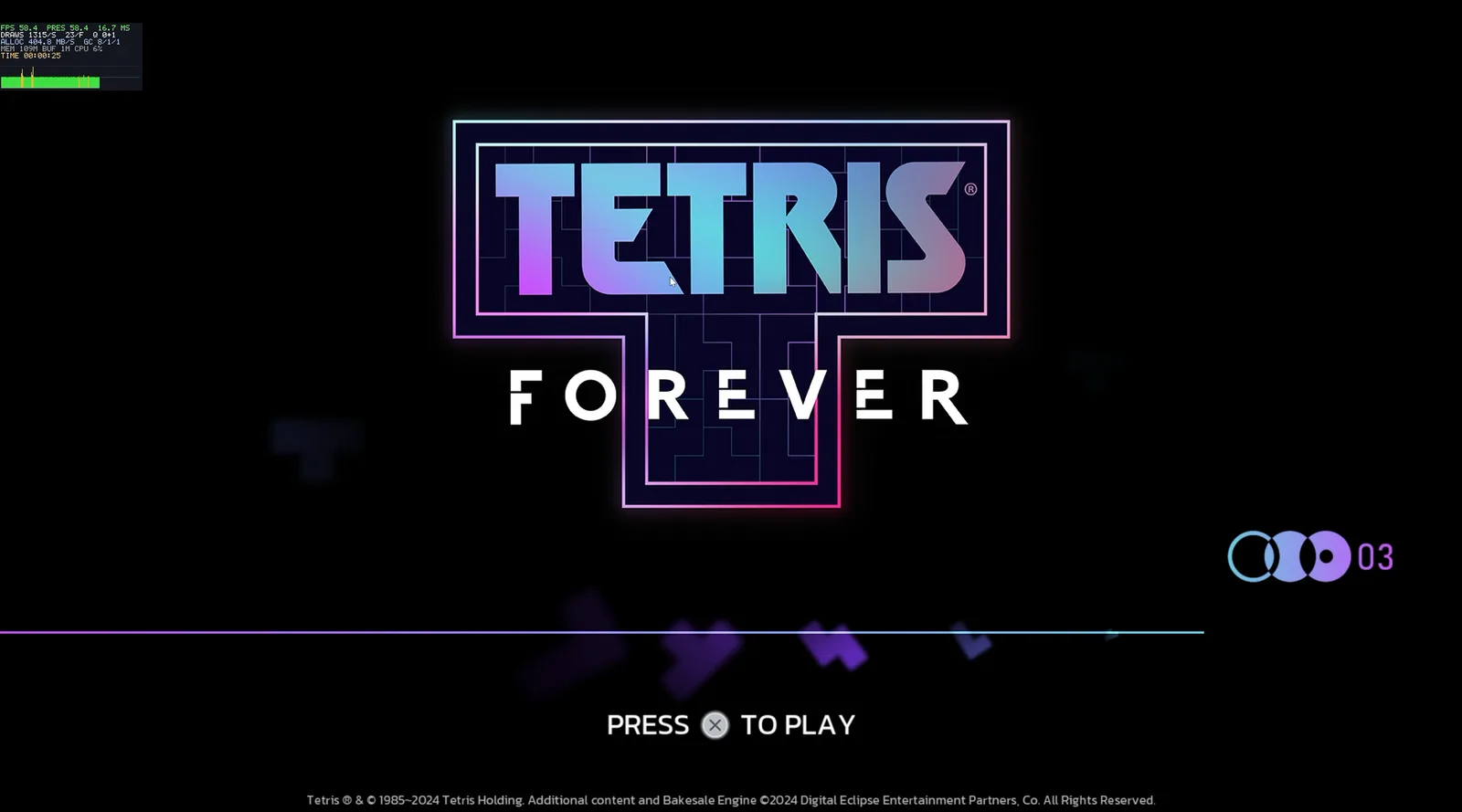
Consolidating 2D Performance & Architecture
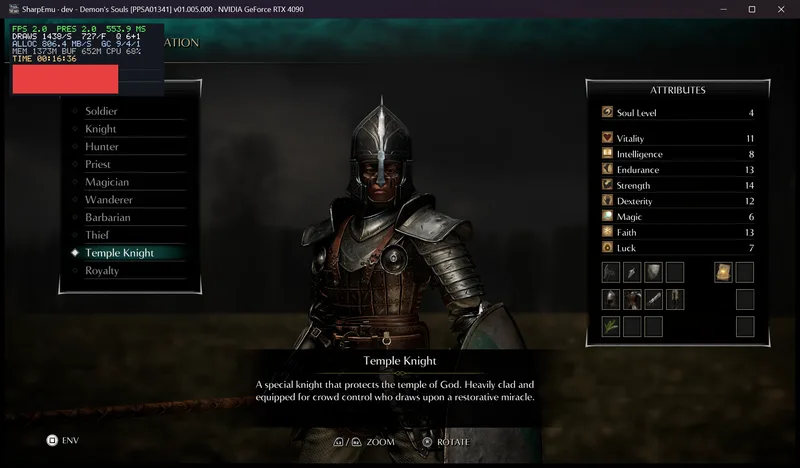
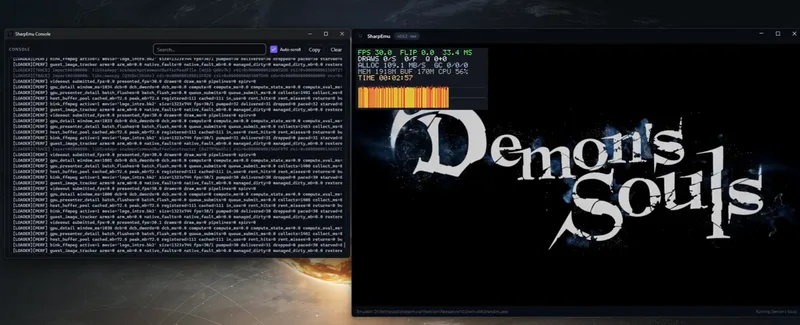
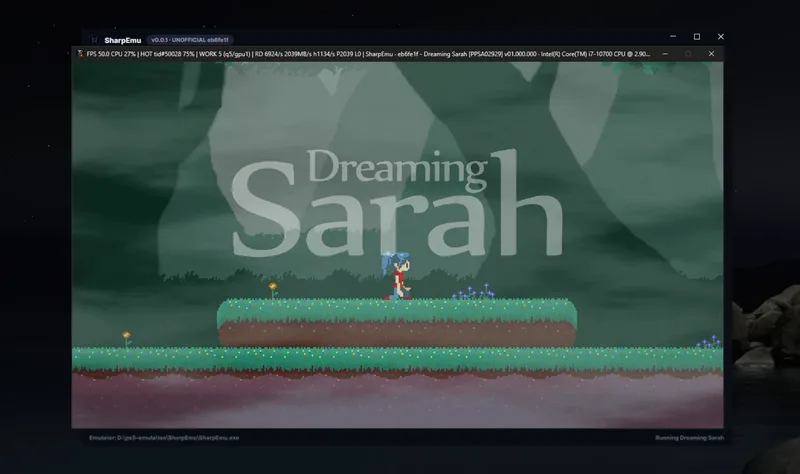
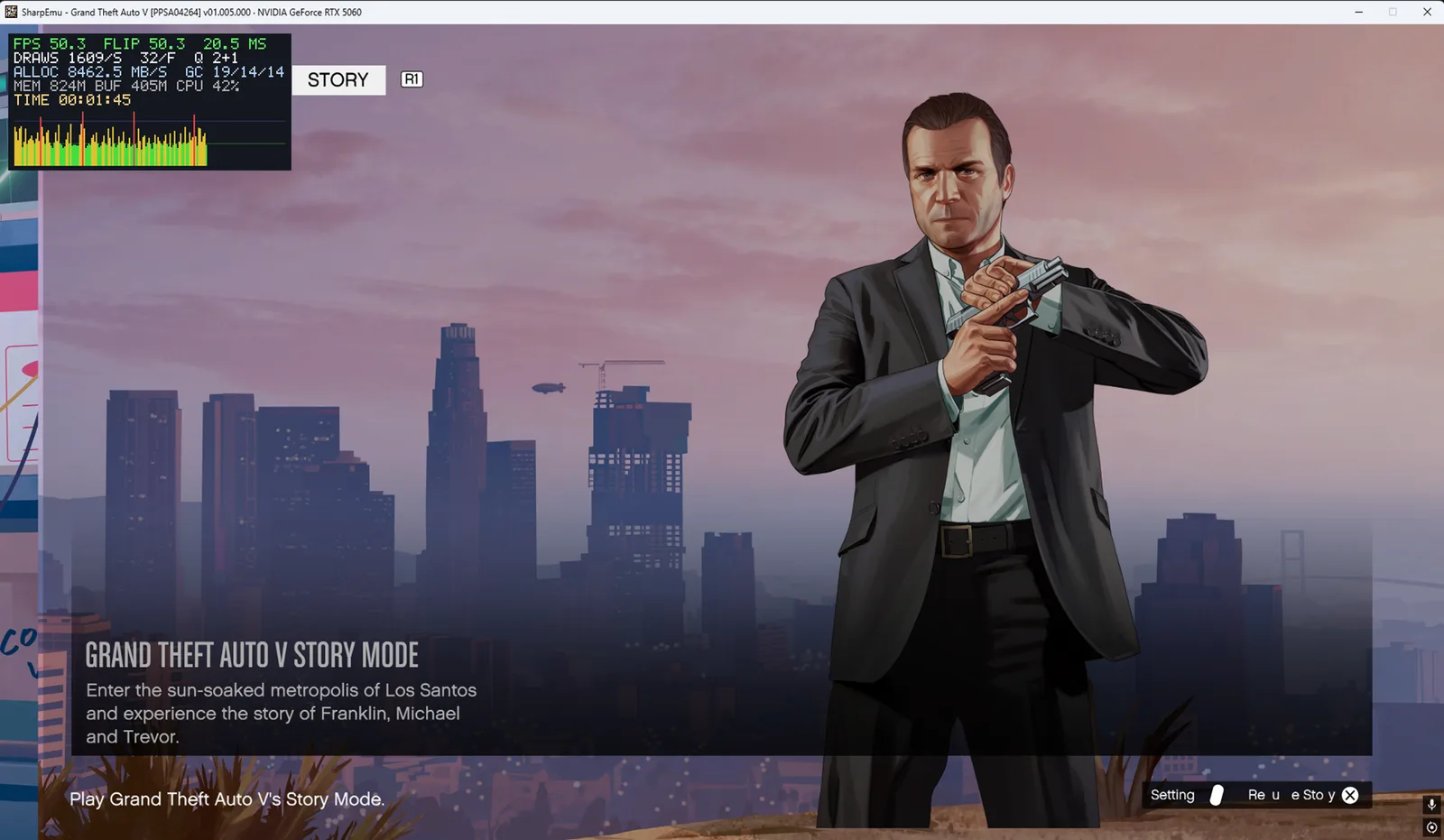
Over the past few months, our primary focus has been eliminating performance bottlenecks, improving memory management, and refining pipeline handling for 2D software rendering and execution.
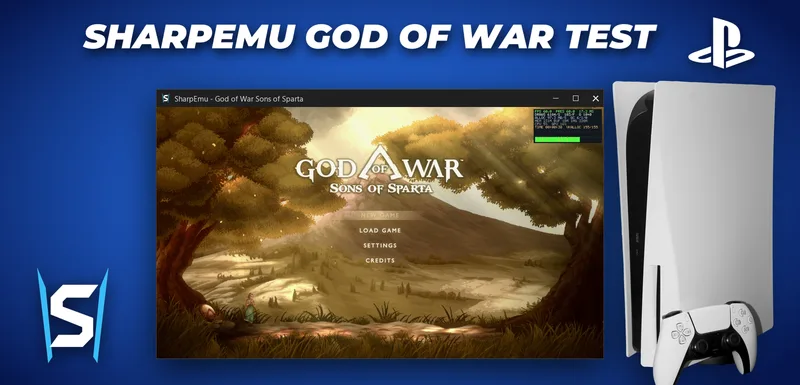
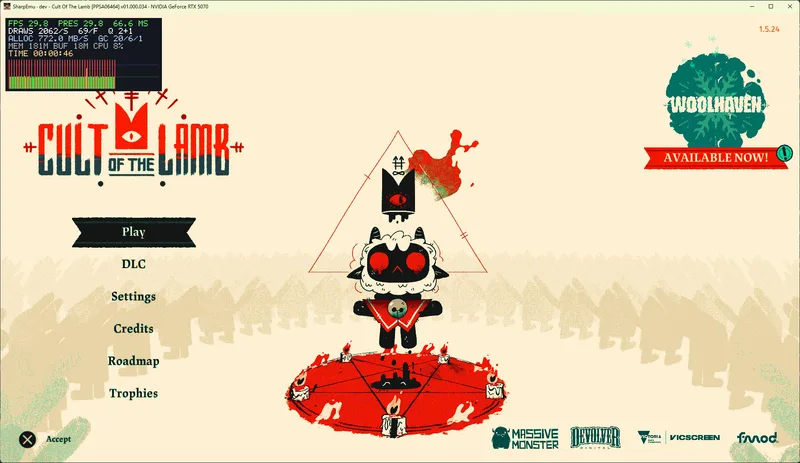
- Stable Frame Rates: Tetris Forever maintains steady 60 FPS performance with low CPU overhead and consistent frame times.
- Core Stability: Memory allocation and buffer management (
D-BUFFERS, memory bounds, and thread synchronization) have reached a point of high reliability. - Framework Scalability: The optimizations applied here directly benefit a wide range of 2D titles and internal collections built on similar engines.
The Next Big Challenge: Venturing into 3D Emulation
With 2D rendering in a great place, we are officially turning the page and tackling the most demanding phase of emulator development: 3D rendering and graphics pipeline execution.
Moving from 2D to 3D involves a massive jump in complexity, requiring us to reverse-engineer and implement:
- Complex Shader Translation: Converting modern platform-specific GPU instructions and shaders into PC-compatible graphics API calls.
- 3D Geometry & Primitive Pipelines: Handling vertex buffers, transformation matrices, and complex geometry layouts accurately.
- Advanced Memory & Texture Management: Managing high-bandwidth texture swapping, depth/stencil buffers, and dynamic render targets.
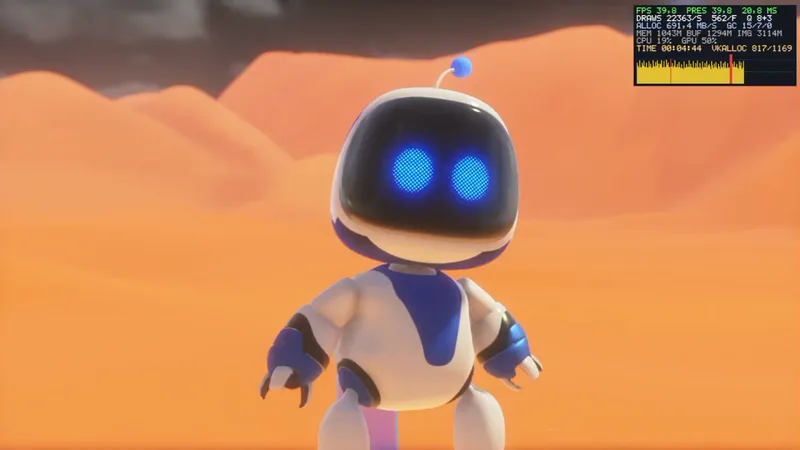
First Target: Astro’s Playroom
To test and build our 3D subsystem, we need a title that uses standard platform features effectively without overly esoteric custom setups. We’ve chosen Astro’s Playroom as our primary 3D testbed, alongside a few other early titles.
Starting with Astro’s Playroom allows us to incrementally implement graphics features from basic geometric output and untextured models all the way up to full shading, lighting, and physics integration.
Roadmap & What to Expect Next
In the coming weeks, updates might focus heavily on low-level graphics logs, wireframe rendering tests, and initial draw-call debugging. Progress in early 3D development often looks subtle on the surface, but every rendered triangle brings us closer to full playability.
- Short-Term Goal: Successful pipeline setup, vertex processing, and rendering initial 3D primitives in Astro’s Playroom.
- Mid-Term Goal: Texture mapping, basic shader translation, and running initial non-interactive 3D scenes.
How to Support SharpEmu
Building an emulator from scratch requires hundreds of hours of research, reverse engineering, and low-level coding. If you enjoy following our journey and want to help us maintain momentum, consider supporting us on Buy Me a Coffe!
Thank you to everyone testing builds, reporting issues, and supporting the project! 💙